
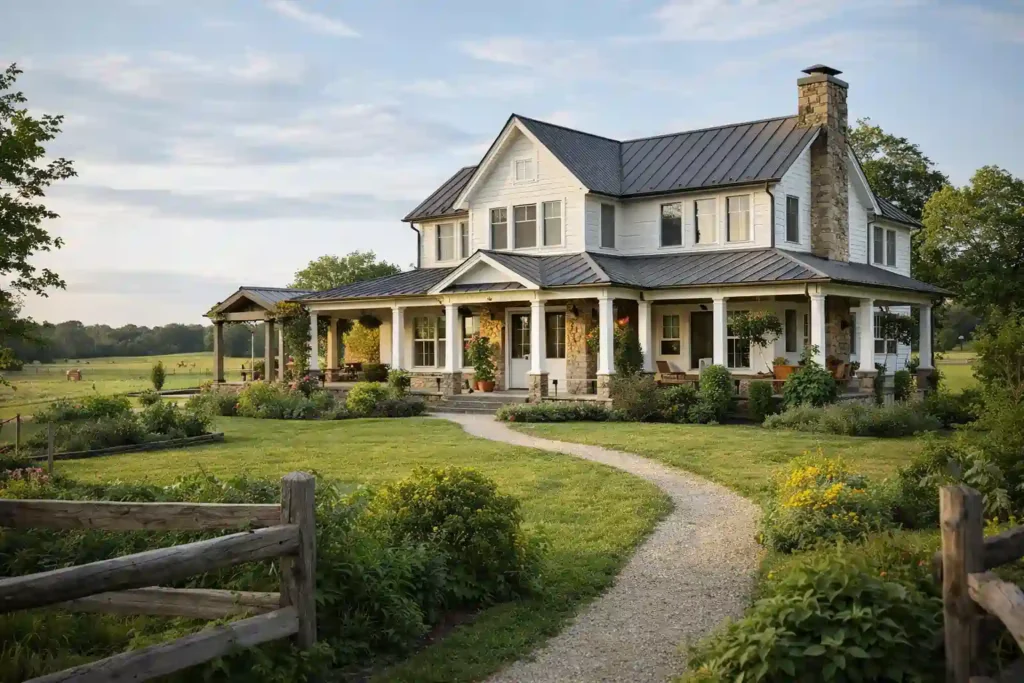
A farmhouse is a house located on a farm. In Indian real estate, the term encompasses a broader meaning. Now, it describes a piece of land with a built-up house and surrounding area, including open spaces and outdoor recreational facilities, located outside of town or city.
Urban Indians are attracted to the farmhouse real estate market for the opportunity to have a private weekend or vacation home, or to host family functions. Farmhouses located around Delhi NCR, and places like Naugaon in Rajasthan, have been showing a rising demand.
While selecting a beautiful location for building a farmhouse is important, there are other factors to consider, like the legal status of the land and building, title deeds and use permits.
This document provides a complete overview of the meaning of a farmhouse in India, types of farmhouses, legal considerations, comparisons with a house and villa, and various checks performed by potential buyers.
Meaning of Farmhouse in Simple Words
A farmhouse is a house located on a farm. In Indian real estate, the term is used to denote a house located on or near a farm. The legal classification of the land along with the stipulations and restrictions of the local law define the status of a farmhouse.
In contemporary property discourse, the definition of farmhouse has expanded. Currently, the term is often used to describe a property with a residential structure, outdoor space, gardens and sometimes facilities such as swimming pools, lawns and recreational areas.
The term farmhouse can take on three different meanings:
- Dictionary meaning: The main residential building on a farm.
- Real estate meaning: A property with a residential building and supporting land, which is often used for weekend and/or second homes.
- Legal meaning: A term with no independent determination on the ownership of land and/or classification of the land and/or building permissions, which is dependent upon prevailing laws and approvals.
What is a Farmhouse in India?
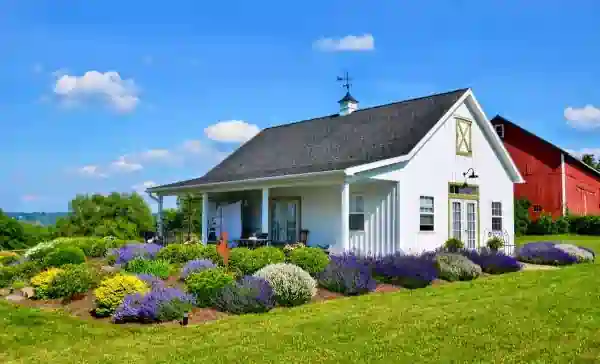
A farmhouse in India means a residential property located in a rural/agricultural area, usually with more outdoor space when compared to an urban residence.
For example, a family living in Gurugram may want to purchase a farmhouse in Naugaon to go for weekend getaways from the city to escape the traffic, crowd and noise of the city.
A farmhouse has:
- A house with rooms, a bathroom, and a kitchen.
- Land with permitted agricultural activities.
- Areas to garden and/or landscape.
- Seating and recreational areas.
- Parking.
- Depending on the property and permissions, utility connections.
There is an important distinction to cover: how a property is marketed vs. how a property is legally classified.
A property marketed as a farmhouse does not mean that the property has permissions for residential construction.
Land use and building regulations differ between states and local authorities. Therefore, buyers should review the pertinent documents and not rely on the property marketing literature.
Book Your Farmhouses Now
Also Read- Delhi Mumbai Expressway
Is a Farmhouse Agricultural Land?
A farmhouse refers to a type of building or property. Classification of land-use is separate and independent.
A property can have agricultural land and/or land classified for a non-agricultural use, and a building on the land. A property’s legal position is a function of the relevant revenue records, land-use approvals, and development regulations.
Can You Build a Farmhouse on Agricultural Land?
One should never assume that the purchase of agricultural land permits the construction of a residential farmhouse.
The Rajasthan Land Revenue (Conversion of Agricultural Land for Non-Agricultural Purposes in Rural Areas) Rules, 2007 and the related provisions of the Rajasthan Land Revenue Act, 1956, in rural Rajasthan, including section 90-A, if applicable, are the legal rules pertaining to land conversion.
Land use conversions may be required based on the land location, category, and applicable exemptions. Before purchasing land, a buyer should review the following:
- The current classification of the land (i.e. agriculture or non-agriculture).
- Whether residential use is permitted.
- Whether all required conversion/change of land use approvals are in place.
- Plans to build and permissions to construct may be required.
- Whether the land has any restrictions.
If you are considering purchasing land in the Naugaon area, these checks should be completed with the relevant revenue and planning authorities. The requirements for one land parcel should not be applied to another land parcel.
You can also seek professional guidance on CLU requirements to understand the applicable land-use conversion process before planning farmhouse construction.
Who Can Buy a Farmhouse or Agricultural Land in Rajasthan?
Eligibility to buy farmland depends on the land classification and applicable state and Central Acts. Farmland has been further sub-classified based on use (irrigation/ non irrigation), area (big, small, medium) and other factors. Buyers should differentiate between land with approved non-agricultural residential use and agricultural land. These may have different eligibility conditions.
Persons of Indian origin should also clarify eligibility for ownership and transfer, as well as title restrictions, before proceeding to purchase.
NRIs and persons of Indian origin should also pay special attention to the regulations of the Foreign Exchange Management Act (FEMA) that generally restricts them from purchasing agricultural land, plantations or farmhouses. There are, however, permitted exceptions to this general rule, such as inheritance. They should seek professional advice before making any such purchase.
Farmhouse vs House vs Villa vs Plot: What’s the Difference?
Although people use these terms interchangeably, the concepts represented by farmhouse, regular house, villa and agricultural plot are quite different.
| Comparison | Farmhouse | Regular House | Villa | Agricultural Plot |
| Location | Usually rural or on the outskirts | Urban or residential locality | Planned residential community or independent location | Agricultural or rural area |
| Land area | Often includes substantial open space | Generally limited to the building plot | Usually includes private outdoor space | Depends on the parcel |
| Main purpose | Weekend living, rural residence or farming-related use | Everyday residential living | Premium residential living | Agricultural activity or permitted land use |
| Amenities | Depend on the property | Local infrastructure and utilities | Often includes planned amenities | Usually limited to existing infrastructure |
| Legal requirements | Depend on land classification and permissions | Residential zoning and building approvals | Applicable residential approvals | Agricultural land regulations |
| Maintenance | Can be relatively high | Usually easier to manage | Depends on size and community services | Depends on land management |
| Resale | Depends on location, title and buyer demand | Depends on residential market conditions | Depends on project and location | Depends on land category and demand |
Villa and Regular House: Generally Subject to Favorable Market Conditions
Farmhouses can be classified into types according to their architectural styles and their intended functions. Being familiar with both will help potential buyers to choose the most suitable property for their needs.
| Design style | Key characteristics |
| Traditional | Sloping roofs, natural materials, verandas and regional architectural features |
| Modern | Clean lines, open layouts, large windows and contemporary finishes |
| Rustic | Stone, exposed wood, earthy colours and natural textures |
| French Country | Elegant detailing, warm interiors and traditional European influences |
| Scandinavian | Simple layouts, natural light, functional furniture and minimal decoration |
| Industrial | Exposed structural elements, metal finishes and practical open spaces |
Uses of Farmhouses
1. Weekend or Second Homes
These properties are a refuge from city life. Families may stay at these homes for vacations or holidays.
2. Working Farms
Farmhouses may be combined with working farms, which may include various forms of agricultural activities and businesses, depending upon local regulations.
3. Hospitality Uses
Some farmhouse owners may engage in hospitality or related businesses, subject to governmental approvals.
4. Gated Farmhouse Communities
Each landowner in these developments may own a separate parcel of land, but they are part of a larger planned or managed community. The infrastructure and community amenities vary among these developments.
Not every style of architecture is permitted for every piece of land. The same is true for various forms of businesses. Potential landowners or business owners should make sure what they want to build or start is permitted.
Farmhouses and Gated Farmhouse Communities in Naugaon
Naugaon is a part of Rajasthan’s Alwar district that is drawing buyers interested in residential properties beyond the urban landscape. Because of its proximity to Delhi NCR, it is an appealing location to consider for a rural secondary home.
As opposed to purchasing an independent farmland, the concept of a gated farmhouse community offers the buying of plots with defined layouts, boundaries and a set of common amenities and services.
Legal sanction for a project does not guarantee any ownership rights for a buyer. Document due diligence to confirm legal title of the land and the developer’s right to sell it is necessary.
In Naugaon some of the projects which claim to offer defined plots within a gated community include:
- Jasmine Farms, Naugaon
- Rasa Estate Farms, Naugaon
- Ram Rattan Green Step Farms
Also, evaluate the project approvals, the infrastructure provided and actual project documents rather than choosing a project solely based on pictures or promotional material.
As for connectivity, consider the Delhi-Mumbai Expressway and the NH-248A (Sohna-Alwar) road corridor. Actual travel times from a particular point would depend on the route and the condition of the roads.
What is the Number of Farmhouse types?
A common question that many buyers will put forward prior to investing is the number of types of farmhouses. The essential distinction between farmhouses is according to architecture and design. A few usual types of farmhouses are given below.
1. Traditional Farmhouse
Farmhouses are a representation of rural constructions. They are frequently wooden, plain inside and out, and have broad verandahs.
2. Modern Farmhouse
The contemporary farmhouses are designed with a blend of the countryside and the modern world. They are with big windows, straight lines, and minimalistic interiors.
3. Luxury Farmhouse
Luxury farmhouses are equipped with high-quality facilities, including a swimming pool, landscaped gardens, and entertainment facilities. These properties are usually favored by the high-net-worth buyers.
4. Rustic Farmhouse
Rustic farmhouses pay attention to the things of nature, like wood and stone. The design provides a cozy and old-fashioned atmosphere.
5. French Country Farmhouse
Known for elegance, incorporating light colors, cream-to-white palettes, and soft, rustic textures.
Invest in Farmhouses Today raised a query on WhatsApp
Is a Farmhouse a Good Investment?
A farmhouse provides benefits like personal space and security, and relaxes the tight restrictions on urban living, and has the potential to appreciate in value. But, it shouldn’t be considered as a safe or guaranteed source of capital appreciation or rental income.
Benefits of Owning a Farmhouse
More personal space: Purchasers can enjoy open spaces, and greater privacy compared to urban residential properties.
- Weekend convenience: A property outside the city can be used for family outings and breaks.
- Flexible permitted use: According to the classification of the land, and subject to various approvals, an owner may be permitted to carry on certain agricultural activities, along with residential use.
- Long-term ownership: Ownership of land may be part of a diversified property portfolio, if the title and legal position are sound.
- Lifestyle value: Some buyers may consider the value of peace, greenery and a slower living, over conventional amenities of city living.
Risks and Disadvantages to Consider
Approval risks: If land is classified incorrectly, land ownership is disputed, or permissions for development are missing, this can lead to trouble.
1. Maintenance costs: Walls, buildings, water systems, gardens and security need upkeep.
2. Limited resale: A rural property may have a limited buyer pool compared to an urban property.
3. Encroachment: Empty or poorly monitored land can have disputed boundaries or unauthorised occupation.
4. Inadequate Infrastructure: Services and infrastructure can differ from urban areas.
5. Irregular returns: Realized returns may not happen every year. It depends on other factors including the condition of the property and market demand.
The approach should be to evaluate a farmhouse first as a legally ownable property to use for the intended purpose. Consider potential capital appreciation only afterwards.
What to Evaluate Before Buying a Farmhouse?
You should check the property physically first, and get it inspected by a professional later. An inspection can reveal issues that are not easily detectable.
| Checkpoint | What buyers should verify |
| Ownership and title | Registered ownership, previous sale deeds and ownership chain |
| Land classification | Agricultural or approved non-agricultural status in official records |
| Land conversion | Applicable CLU or conversion permissions, where required |
| Construction approval | Approved building plans and relevant permissions |
| Encumbrances | Existing mortgages, charges, court cases and claims |
| Road access | Legal access, approach roads and recorded rights of way |
| Water and electricity | Availability, connections and supporting records |
| Plot boundaries | Survey records, demarcation and physical boundaries |
| Project approvals | Developer authority, layout permissions and applicable registrations |
| Transaction costs | Stamp duty, registration charges, taxes and other applicable expenses |
Don’t solely rely on the photocopies given by the seller. Verify the documents with the relevant authorities and take legal advice.
For a more detailed verification process, refer to our due diligence and legal land document checklist, or use our legal land consultation service.
Conclusion
Privacy and proximity to nature are some key attractions that a farmhouse can provide over and above a conventional urban residence. The areas around Delhi NCR can be investigated.
However, interest in a farmhouse should not be in vain. Legal due diligence and financial checks should precede the decision to purchase a farmhouse. An attractive investment ad or a beautiful farmhouse does not mean that the land or the farmhouse is legally approved.
Land classification, ownership, building permission and use permits, and access should be cross checked. Compare farmhouses based on actual merits instead of relying on over blown or misleading marketing descriptions.
At Naugaon Farms, do a property due diligence and take an informed decision prior to purchasing.
About Farmhouses: FAQs
In India, a farmhouse typically means a house in a rural or agricultural setting, with surrounding land. It can be a second residence, weekend home, or farm, as the case may be, with regard to the legal use and approvals.
Yes, provided the occupancy is in accordance with the land use approval and regulations. Buyers should confirm the farmhouse’s classification and approvals for occupation before moving in.
No. A farmhouse is considered as a building or property description. Agricultural land classification and a farmhouse may co-exist. A farmhouse on agricultural land is subject to all applicable construction and land use regulations.
Not always. Commercial use of a farmhouse may require land use permission, local area approvals, and other regulatory requirements.
A location near Naugaon may interest buyers desiring rural surroundings and a property outside the urban area of Delhi NCR. However, whether it is suitable depends on the buyers budget, purpose, use case, road connectivity, title, and regulatory approvals.