
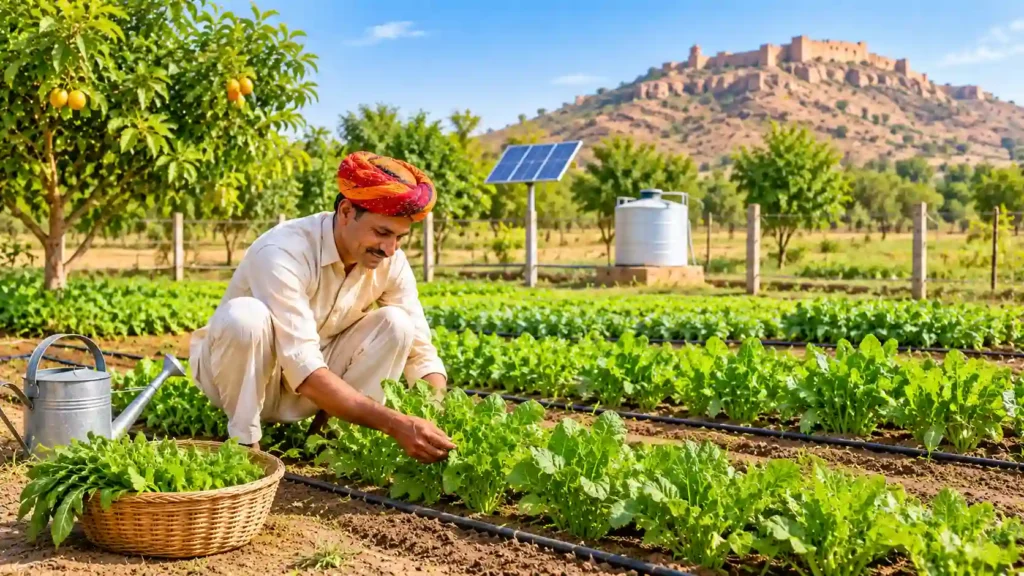
Picture a quiet weekend away from Gurugram or Noida, with vegetables on the table that grew in soil nurtured by hand. For many property buyers, that picture feels out of reach in a dry state like Rajasthan. The reality is more encouraging.
Organic farming on a small agricultural plot is practical, affordable, and gaining popularity among Delhi NCR buyers. This guide explains what sustainable farming in Rajasthan looks like for someone with limited land, and where to begin.
Can Organic Farming on a Small Agricultural Plot Work in Rajasthan?
Yes, it can. A small agricultural plot of one or two bighas is enough to grow vegetables, pulses, herbs, and a handful of fruit trees without chemicals. Success depends less on size and more on planning around water, soil, and crop choice.
The approach suits buyers who want a long-term, low-pressure asset that also produces something real. It rewards patience more than capital.
Why Rajasthan Suits Chemical-Free Cultivation?
Rajasthan’s dry climate quietly works in favour of growers. Fewer humid months mean fewer fungal diseases, so natural pest control is easier to manage. Sunshine is plentiful, and traditional crops like bajra, moong, guar, and cumin are already adapted to arid conditions.
The state has also supported organic farming through policy and training programmes, and demand for chemical-free produce in nearby metros keeps growing. Together, these factors make sustainable farming in Rajasthan a realistic choice rather than an experiment.
Read More: CLU Property Guide
Legal Checks Before Buying Farmland
Paperwork deserves attention before any token money changes hands. A small agricultural plot may carry fewer complications than a large holding, but the checks are the same:
- Land use: Confirm the plot is recorded as agricultural in the revenue records (jamabandi).
- Title: Review ownership history and make sure there are no disputes, loans, or encumbrances.
- Khasra and mutation: Match the khasra number and confirm the sale will be recorded in the buyer’s name.
- Conversion: Farmland cannot simply be used for construction or commercial projects without official permission.
- Local verification: Ask a local lawyer or the revenue office to confirm current rules, since they change.
What Organic Farming Methods Can Be Used on Smaller Holdings?
Smaller holdings can benefit from farming methods that use available space efficiently and avoid unnecessary input expenses.
The objective should be to develop a manageable cultivation system rather than immediately attempting large-scale commercial production.
Composting and vermicomposting
Composting converts suitable biodegradable farm waste into organic manure. Vermicomposting uses earthworms to help break down organic material.
Both methods can support nutrient recycling when managed correctly.
Mixed cropping
Mixed cropping involves growing two or more crops together.
For example, suitable pulses may be cultivated alongside other crops where their growing requirements are compatible.
This approach can diversify production and reduce dependence on a single harvest.
Natural pest management
Neem-based preparations, botanical extracts, physical barriers, crop rotation, and beneficial insects can form part of an integrated pest management strategy.
However, organic cultivation does not mean ignoring pest control. Regular crop monitoring and timely intervention remain important.
Integrated farming
Some landowners may eventually combine crop cultivation with fruit trees, poultry, or other suitable agricultural activities.
Such integration can make productive use of available resources, although it also increases management requirements.
These practices support sustainable farming in Rajasthan when they are adapted to the property’s actual environmental conditions.
Soil and Water Planning Agricultural Plot in Rajasthan
Start With a Soil Test
A soil test shows pH, organic carbon, and nutrient levels. Sandy soils common in Rajasthan usually respond well to compost, farmyard manure, and green manure crops such as dhaincha.
Make Every Drop Count
Water is the biggest constraint. Drip irrigation, mulching, and a rainwater harvesting pit can cut consumption sharply. Buyers relying on a borewell should check groundwater depth and quality before purchase. Efficient water use is the backbone of sustainable farming in Rajasthan.
Best Crops for a Small Plot
Mixed cropping spreads risk and keeps the land productive through the year. For organic farming on a small agricultural plot, a smart mix pairs quick vegetables with long-term fruit trees.
| Crop Group | Examples | Why it works |
| Vegetables | Okra, bottle gourd, brinjal, tomato | Quick harvests and steady cash flow |
| Pulses and millets | Moong, moth, bajra | Low water needs; pulses enrich the soil |
| Spices | Cumin, coriander, fenugreek | High value, short growing cycle |
| Fruit trees | Ber, guava, pomegranate, lemon | Long-term income, drought tolerance |
| Medicinal plants | Aloe vera, ashwagandha | Low maintenance, niche demand |
Intercropping and border plantations help a small agricultural plot work harder by adding shade, wind protection, and extra yield.
Natural Inputs and Pest Control
Chemical fertilisers and pesticides give way to vermicompost, cow dung manure, jeevamrut, and neem-based sprays. Crop rotation, trap crops, and companion planting break pest cycles. Once a routine is set, these methods cost little and form the foundation of organic farming.
Certification and Selling Produce
Certification proves that organic farming claims are genuine. India has two main routes. NPOP third-party certification suits larger and export-focused operations. PGS-India is a group-based system better suited to small farmers selling domestically. Land typically goes through a conversion period of two to three years before produce can carry an organic label.
Buyers planning organic farming on a small agricultural plot should apply early and keep detailed records. Selling options include direct subscriptions for Delhi NCR households, farmers’ markets, organic stores, and restaurants. A small agricultural plot will not supply a mass market, but it can serve a loyal niche well.
Costs, Returns, and Realistic Expectations
Main costs include land, fencing, a water source, labour, and inputs. Early years of organic farming mostly go into building soil, so income may be modest. Absentee owners usually need a reliable caretaker or farm manager.
Returns improve as soil health and the customer base grow. A realistic plan for organic farming on a small agricultural plot treats it as a blend of lifestyle, land value, and steady farm income rather than a quick-profit scheme.
Common Mistakes to Avoid
- Skipping the soil and water test
- Buying land without verifying records
- Planting water-hungry crops
- Having no one to oversee the plot
- Expecting full profits in the first season
Steps to Start Organic Farming on a Small Agricultural Plot
- Pick a location: Choose a small agricultural plot within easy reach of Delhi NCR, with good road access and reliable groundwater.
- Verify documents: Complete the legal checks listed above.
- Test soil and water: Use results to plan crops and inputs.
- Build the basics: Fence the plot, install drip irrigation, and dig a compost pit, the building blocks of organic farming.
- Plant hardy crops: Begin with a few reliable varieties and green manure.
- Get certified: Apply for PGS-India or NPOP and record every input.
- Build sales channels early: Document the practices that make this sustainable farming in Rajasthan.
Conclusion:
Organic farming on a small agricultural plot in Rajasthan is a realistic goal for Delhi NCR buyers who plan well. Start with legal checks, a soil and water test, and hardy crops. A small agricultural plot rewards patience, and organic farming rewards consistency.
With the right groundwork, sustainable farming in Rajasthan can become a rewarding addition to a property portfolio.
Start Organic Farming on a Small Agricultural Plot: FAQs
There is no fixed minimum. Organic farming on a small agricultural plot can begin with just one bigha, planted with vegetables, herbs, and a few trees.
Rajasthan has generally been more open to non-farmer buyers than several other states, but restrictions can apply to certain land categories. A local lawyer should confirm eligibility before purchase.
It can be, mostly through direct sales and high-value crops. Organic farming on a small agricultural plot rarely brings quick profits, but returns tend to grow over a few seasons.
Less than conventional methods when drip irrigation and mulching are used. Careful water management keeps sustainable farming in Rajasthan viable.
Certification requirements depend on how the produce is marketed and whether an organic claim is made. PGS-India and NPOP are recognised certification systems in India. Farmers should check the applicable FSSAI requirements before marketing produce as certified organic.